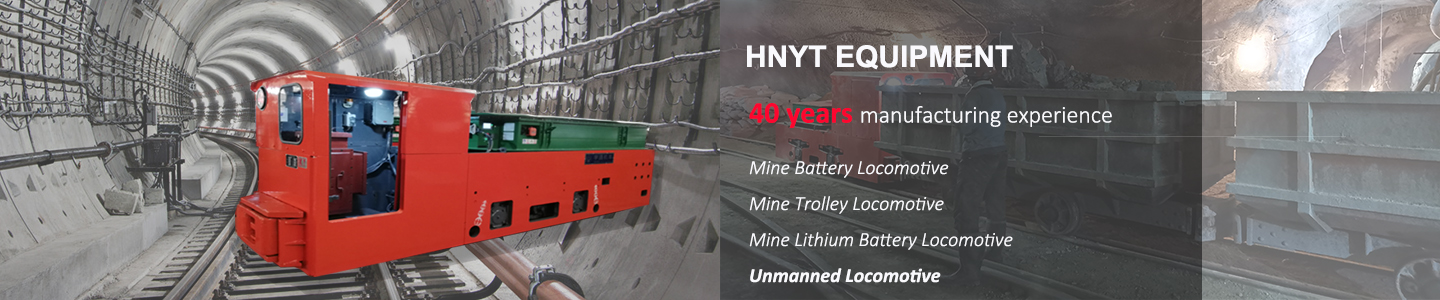
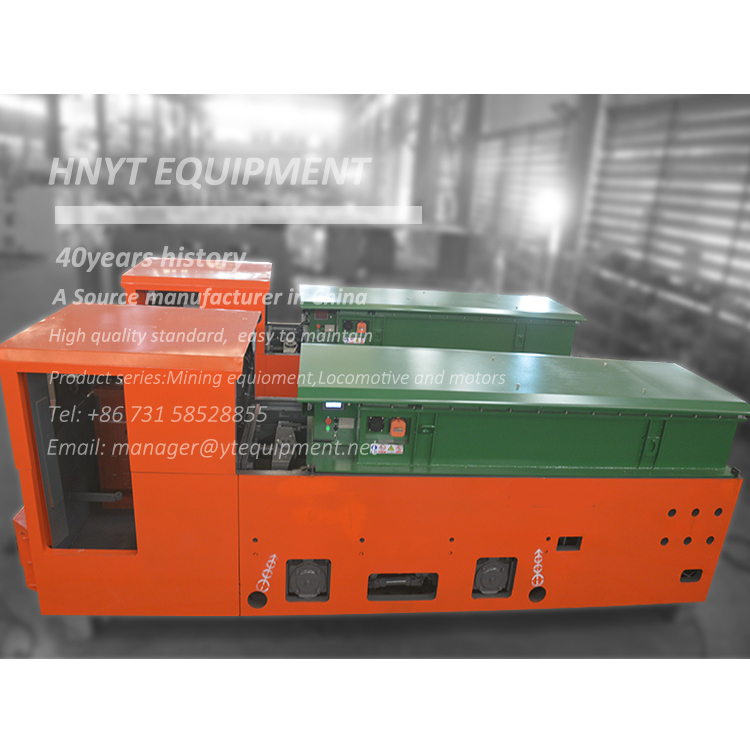
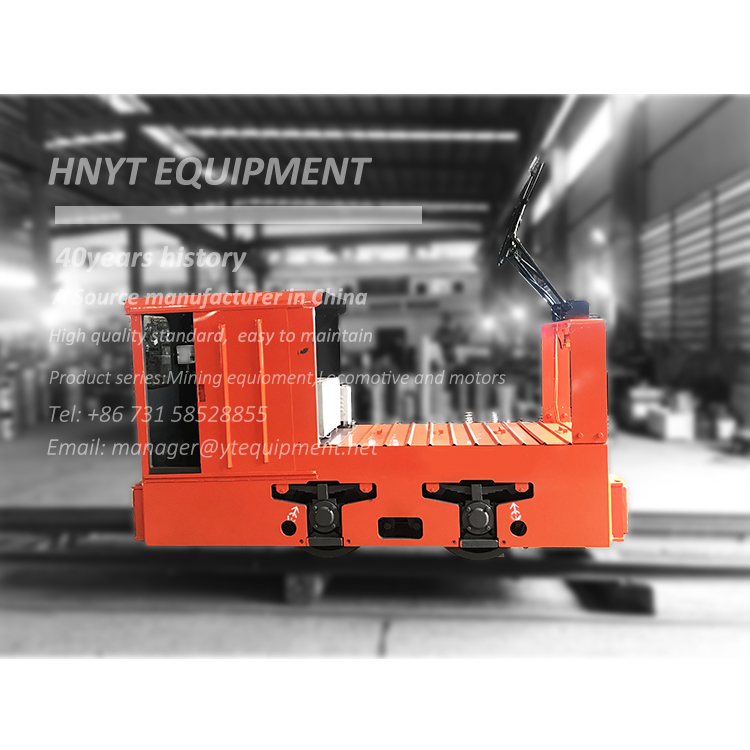
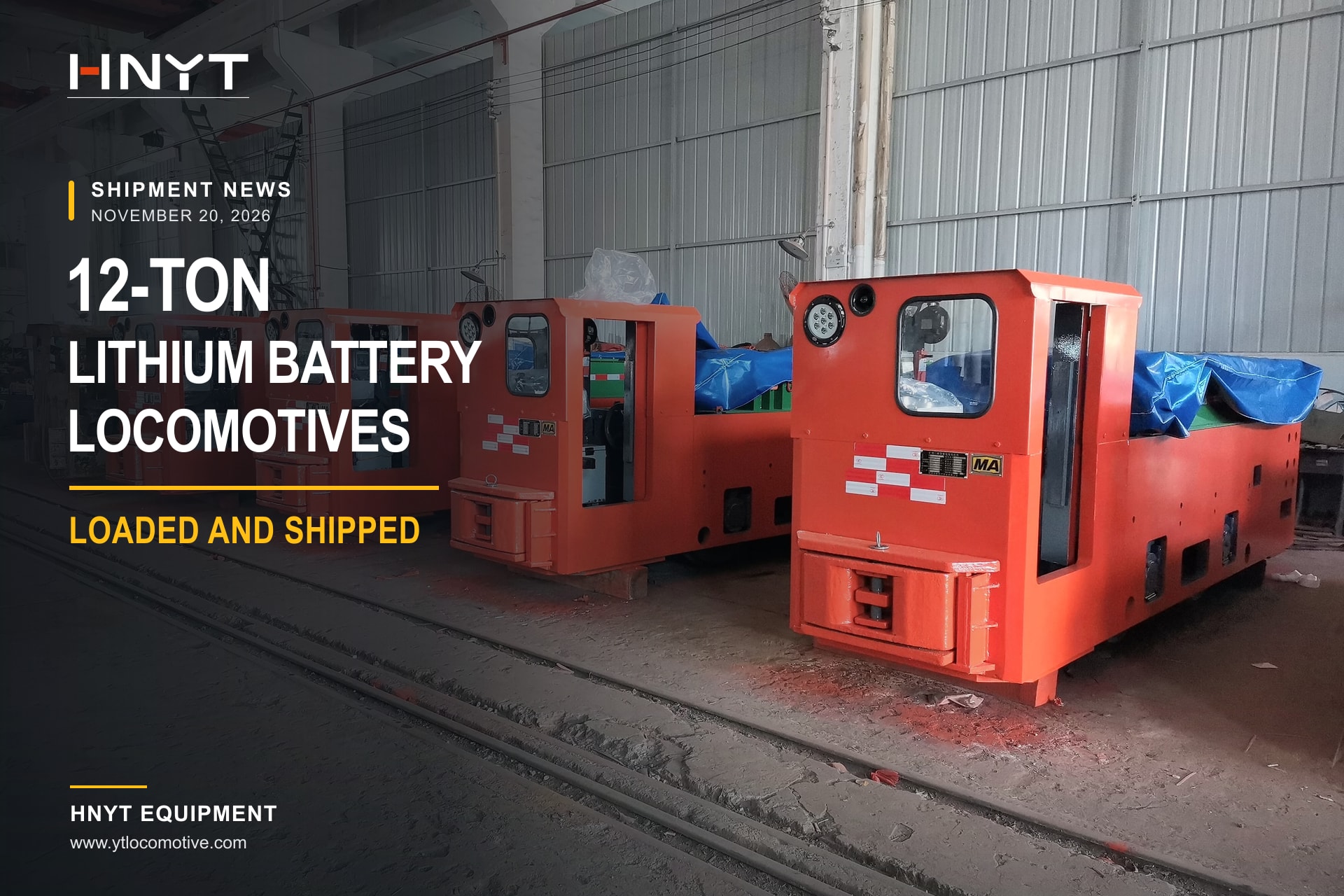
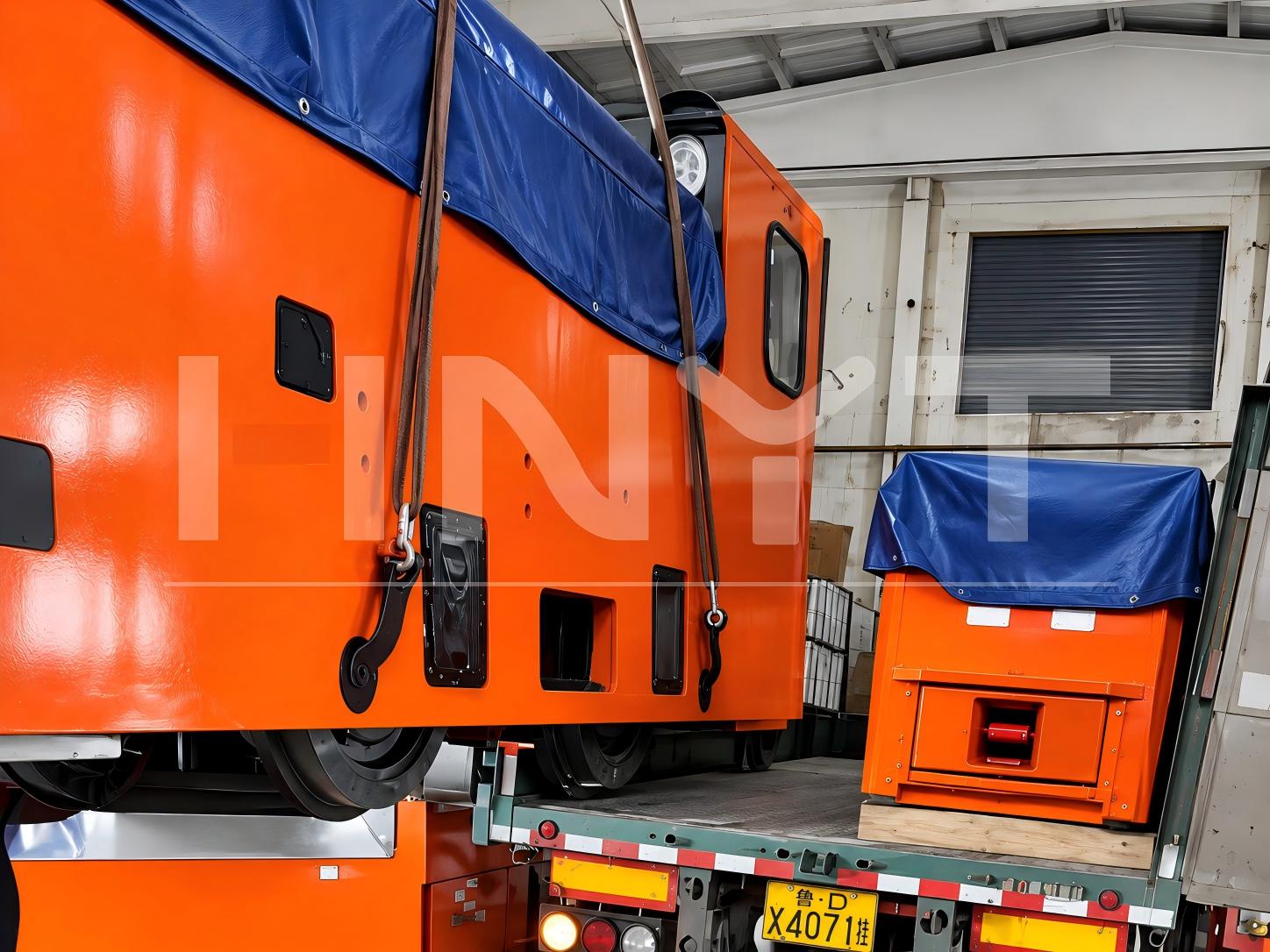
On November 20, 2026, HNYT loaded and dispatched a batch of 12-ton lithium battery locomotives by truck. The units are designed for rail haulage in underground mines and tunnels, where locomotives move loaded mine wagons, equipment and materials along fixed tracks. A workshop photograph shows four orange locomotives lined up before loading, while two additional photographs capture details of the truck-loading stage. Together, the images provide a record of this shipment from workshop staging to road transport.
Equipment | Battery-electric mining locomotive |
Locomotive weight class | 12 tons |
Power source | Onboard lithium battery |
Dispatch method | Truck transport |
Units visible in workshop photo | Four locomotives (pictured lineup) |
The 12-ton designation identifies the locomotive weight class, not a fixed 12-ton ore payload. In an underground rail system, the wagons carry the material and the locomotive supplies the tractive effort needed to move the loaded train. The allowable train load depends on the route gradient, rolling resistance, wagon arrangement, adhesion and braking conditions; it should be checked against the actual project rather than inferred from the locomotive class.
The 12-ton lithium battery locomotive product page lists 600, 762 and 900 mm track gauge options for the model range. The gauge must match the project railway.
The linked product page describes the CTY12/6, 7 and 9G(B) model family and lists alternative speed-control and braking arrangements. These are published model-range options, not confirmation that every listed option was fitted to the locomotives in the shipment photographs. Buyers should confirm the as-ordered gauge, traction system, power and battery configuration before comparing a quotation with their railway requirements.
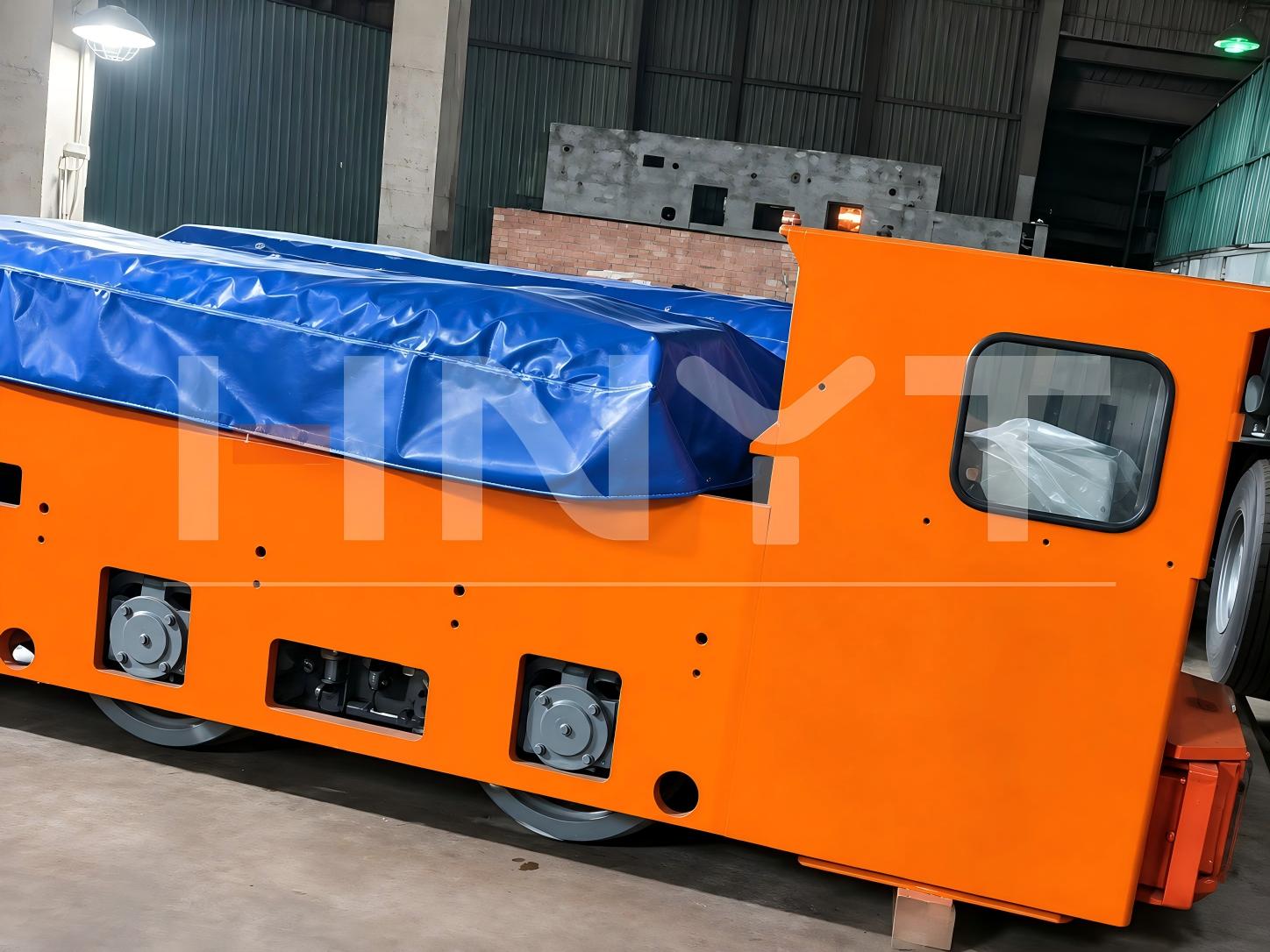
Before road dispatch, the locomotives were staged together in the factory workshop. The group photograph shows the front cab sections and side access openings of four units, with blue protective covers visible over parts of the equipment. The lineup makes it possible to see the general body arrangement and identify the locomotives as a batch of similarly presented rail vehicles. The first close-up photograph provides a side view of one orange locomotive, including its cab window and the covered section behind the cab.
In the second loading photograph, a locomotive is positioned beside the truck bed with lifting slings visible along the body. Other covered items can be seen farther forward on the vehicle. This view records the lifting and positioning stage, rather than an operating demonstration at a mine site. For road transport of heavy rail equipment, lifting arrangements, support points, wheel restraint and truck capacity must be matched to the actual unit and transport plan; the photographs alone do not establish the final securing method.
A lithium battery mining locomotive carries its electrical power on board, allowing it to travel on suitable rail sections without an overhead contact wire. This can be useful for mine transport routes or tunnel construction sections where installing and maintaining an overhead supply is inconvenient. Battery operation does not eliminate infrastructure requirements, however: a project still needs a suitable charging arrangement, electrical protection and maintenance access.
In many underground operations, a locomotive works as one part of a haulage system that includes mine wagons, loading points, passing sections and unloading stations. The overall transport cycle depends on wagon capacity, loading time, route length, train speed and the number of trips required per shift. Selecting a larger locomotive by weight class alone will not guarantee higher output if track conditions, gradients or wagon handling limit the system.
A suitable 12-ton battery locomotive should be selected around the railway and its working duty, not simply the tonnage in the model name. Start with the existing track gauge and rail condition, the narrowest roadway clearance and the tightest curve on the route. Then identify the maximum operating gradient, the number and type of wagons, and the total mass of the fully loaded train, including the empty wagon weight. These details determine whether the proposed locomotive can fit, pull and stop the train under the project conditions.
For traction and braking review, provide the heaviest intended train, the steepest uphill and downhill sections, and any operating restrictions at loading or unloading points. The battery and charging arrangement should also reflect the haulage distance, number of journeys per shift, available charging time and local power supply. For mines with special hazardous-area requirements, the relevant electrical protection and certification must be confirmed separately; the shipment photographs do not indicate an explosion-proof specification.
Providing these operating conditions at the inquiry stage helps HNYT compare the published 12-ton locomotive options with the intended rail system. It also helps avoid an otherwise common mismatch: a locomotive that fits the nominal gauge but cannot negotiate a tight curve, handle the full train weight on a slope, or meet the planned shift schedule without a suitable charging strategy.
See a battery locomotive hauling loaded mine wagons for an example of a loaded wagon train, or read about a battery mine locomotive and rock loader shipment for another battery locomotive delivery.
The related operating and shipment reports illustrate different parts of an underground rail-haulage workflow. The loaded-wagon report shows how a battery locomotive moves a train to the unloading point; the separate locomotive-and-loader dispatch shows how track compatibility matters when equipment is supplied for an existing railway. These examples provide context for planning, but their specifications and operating results should not be assumed to apply to the 12-ton units pictured above.
Planning a similar underground rail-haulage system? HNYT can review the project requirements and help identify a suitable lithium battery locomotive configuration. For a useful first assessment, share the intended quantity, gauge, maximum gradient, minimum curve radius, wagon quantity and fully loaded train weight, as well as the route length and planned shifts.
Request a configuration and quote with your railway data and required quantity.